Why I Built My Own Healthy-Cooking System
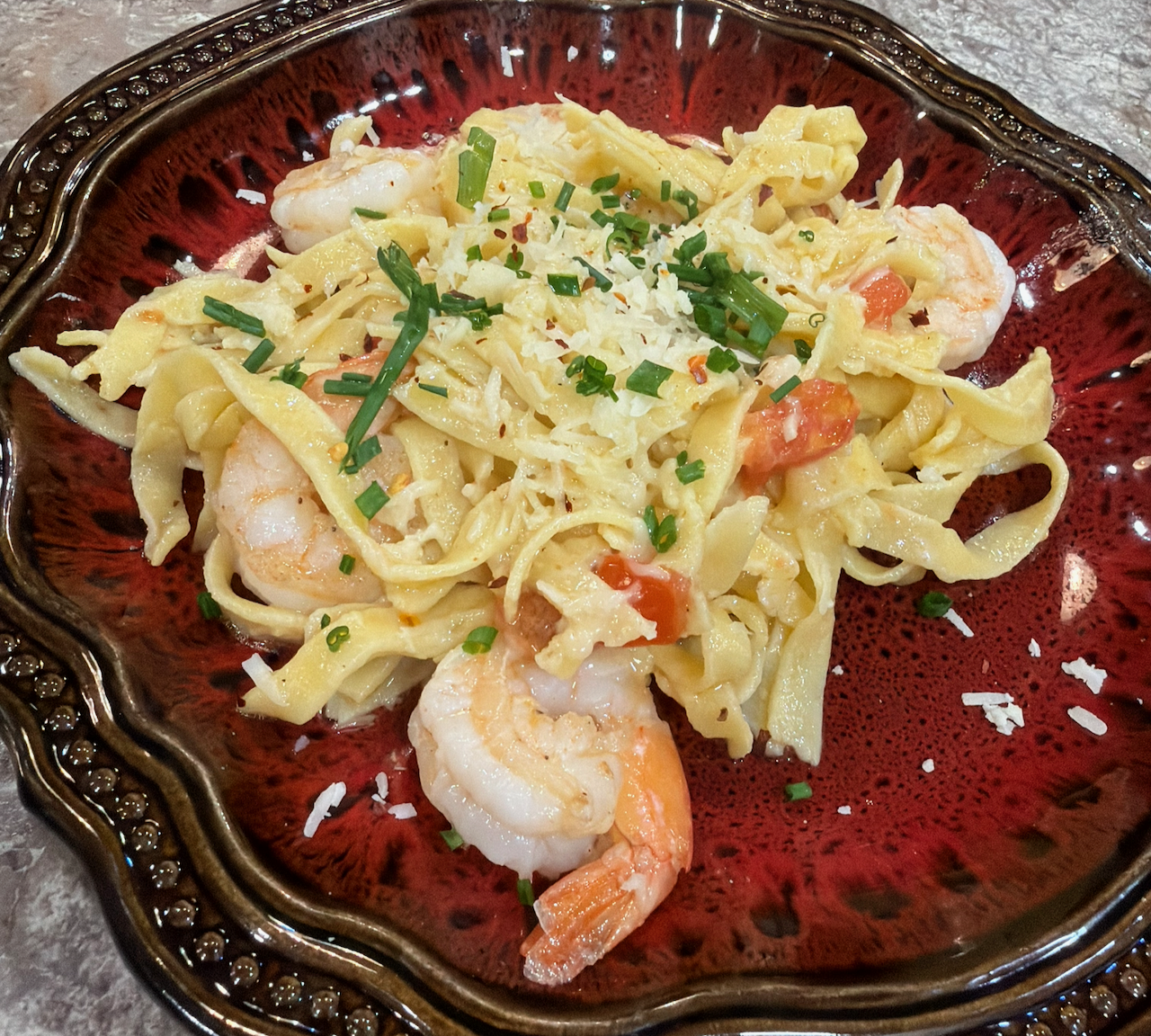
Gluten-free homemade fettuccine with shrimp in extra-virgin olive oil — and the first meal logged by my new voice-driven food tracker.
This dish was in my food log before I sat down to eat it. I logged it by talking.
Most who read this know me as Blane in financial services or as a product leader. I also love to cook, mostly seafood and chicken, lots of vegetables, and adapted recipes from experts I follow. The cooking itself is rewarding. What hasn’t been great is everything around it: the writing, the recipes, the research, the daily meal data. Until this week, all four of those lived in different places:
- Notes app
- Browser Reading List
- Google Drive, or worse,
- My head
So I built one tidy place that handles it all.
The problem
I wanted something that:
- Stops scattering my own work. Articles I write, recipes I love, research I gather — one home, not four.
- Removes the friction from logging meals. Existing food-tracking apps are slow and error-prone for the nutrition data I actually care about. Logging an honest meal takes more effort than the insight is worth.
- Lets me publish selectively. Most of what I write should stay private. Some pieces deserve to be public. There’s no clean way to do that today without retyping things in three places.
What I built
Four pieces. Three of them work today.
- One home for everything I write. Articles, research, recipes — all in one folder, in plain text files. Each file carries a small set of details up top: a date, the type of piece, and whether it’s ever allowed to be public. Get those details wrong, and the system politely refuses the file. That’s how things stay tidy without me babysitting them.
- A meal logger I can talk to (the thing that captured the fettuccine above). I speak the meal, and it lands in a Google Sheet with calories and macros calculated from the USDA’s nutrition database. Working today.
- A public website (built but not yet live). Only the pieces I’ve explicitly marked public show up there. Same writing, same place — just filtered.
- A recipe finder (planned). Tell it what’s in the fridge, and it’ll go hunting through my favorite cooking sites for matches, then drop candidates into the folder as drafts I can adapt and save.
The meal logger is the part I’m most excited about. Here’s what it actually feels like:
I press a key, say something like “two scrambled eggs and a slice of sourdough toast with butter,” and press a key to stop. My Mac Mini turns the audio into text on its own — that audio never leaves the machine. A small AI named Claude reads the sentence and figures out what I ate, how much I ate, and a reasonable estimate of its weight in grams. The USDA’s nutrition database provides calorie, protein, carb, fat, and fiber information for each item. I see what’s about to be saved, accept or correct it, and it lands in the sheet.
If the USDA doesn’t have a match for something, I see that and fill it in by hand — the AI is never allowed to invent nutrition numbers. Every row passes through my eyes before it gets logged.
What does it cost?
About five hours from an empty folder to a working voice-to-sheet logger. Six cents a month at roughly sixty meals (the AI parsing is the only paid piece; everything else runs on free tiers).
Passwords and access keys live in the Mac’s built-in secure storage, not in files on disk. My access to Google services expires on a schedule rather than being a permanent file lying around. None of that matters until the day someone walks off with your laptop — then it matters a lot.
I’m telling you the cost because I think people overestimate what building your own tools takes. This setup replaces three apps for me, and it costs less than a cup of coffee to stand up.
Why this will last?
The four pieces don’t depend on each other. My writing lives in plain text files I can open in any editor — they’ll outlive any website I build today and work with whatever tools come next. The food log is in a Google Sheet now, but I could move it somewhere else tomorrow without rewriting the part that captures the meal. The meal logger, the website, and the recipe finder can each grow at their own pace without breaking the others.
That separation is the part I’d defend if anyone asked.
Why I’m writing here
If you’ve been reading my Substack, you know it’s mostly product, AI, and business. I’m starting to write the pieces where AI crosses into the personal side of my life — cooking, gardening, the everyday tools I build for myself. Same AI, different half of life. This is the first.
I’ll keep writing about this project as it grows — the building, the cooking, what surprises me, what fails. Some posts will be more technical. Some will be recipes (the next one is the fettuccine above). Most will be both.
If that sounds interesting, subscribe. Roughly weekly. No filler.